
Overview
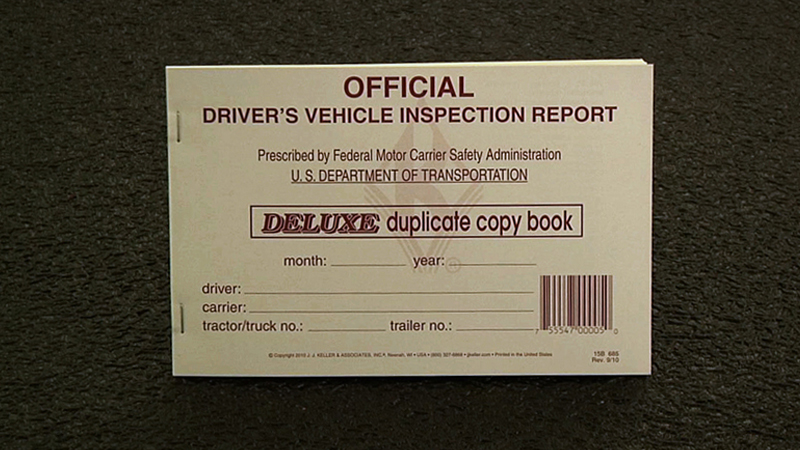
 Every motor carrier must require its drivers to report and every driver must prepare a report in writing at the completion of each day’s work on each vehicle operated. The report must cover at least the following parts and accessories:
- Service brakes including trailer brake connections;
- Parking brake;
- Steering mechanism;
- Lighting devices and reflectors;
- Tires;
- Horn;
- Windshield wipers;
- Rear vision mirrors;
- Coupling devices;
- Wheels and rims; and
- Emergency equipment.
The report must identify the vehicle and list any defect or deficiency discovered by or reported to the driver which would affect the safety of operation of the vehicle or result in its mechanical breakdown. If a driver operates more than one vehicle during the day, a report must be prepared for each vehicle operated. Drivers are not required to prepare a report if no defect or deficiency is discovered by or reported to the driver.
The driver must sign the report. On two-driver operations, only one driver needs to sign the driver vehicle inspection report, provided both drivers agree as to the defects or deficiencies identified.
Prior to requiring or permitting a driver to operate a vehicle, every motor carrier must repair any defect or deficiency listed on the driver vehicle inspection report which would be likely to affect the safety of operation of the vehicle. Motor carriers must maintain on file the original driver vehicle inspection report, the certification of repairs and the certification of the driver’s review for three months from the date the written report was prepared. The report may be created and maintained in electronic format.