
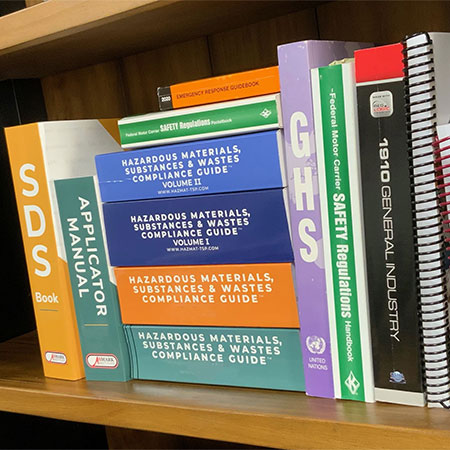
Overview
The Occupational Safety and Health Administration (OSHA) requires employers to have a Safety Data Sheet (SDS) in the workplace for each hazardous chemical they use. SDS are written or printed material concerning a hazardous chemical that provides information from the chemical manufacturer to the end user. Employers and employees need the information contained on SDS to protect themselves from hazardous chemical exposures and to work safely with chemical products.
SDS must be provided in English and include at least the following section numbers and headings:
- Section 1, Identification;
- Section 2, Hazard identification;
- Section 3, Composition/information on ingredients;
- Section 4, First-aid measures;
- Section 5, Fire-fighting measures;
- Section 6, Accidental release measures;
- Section 7, Handling and storage;
- Section 8, Exposure controls/personal protection;
- Section 9, Physical and chemical properties;
- Section 10, Stability and reactivity;
- Section 11, Toxicological information;
- Section 12, Ecological information;
- Section 13, Disposal considerations;
- Section 14, Transport information;
- Section 15, Regulatory information; and
- Section 16, Other information, including date of preparation or last revision.
The employer must maintain in the workplace copies of the required SDS for each hazardous chemical, and must ensure that they are readily accessible during each work shift to employees when they are in their work areas. Electronic access and other alternatives to maintaining paper copies of the SDS are permitted as long as no barriers to immediate employee access in each workplace are created by such options.
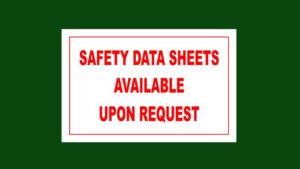
Retail distributors selling hazardous chemicals to employers having a commercial account must provide a SDS to such employers upon request, and must post a sign or otherwise inform them that a SDS is available. Wholesale distributors selling hazardous chemicals to employers over-the-counter may also provide SDS upon the request of the employer at the time of the over-the-counter purchase, and must post a sign or otherwise inform such employers that a SDS is available.
Globally Harmonized System
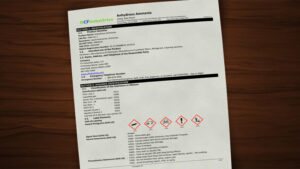
OSHA’s Hazard Communication Standard has been updated to align with the Globally Harmonized System of Classification and Labeling of Chemicals (GHS). The hazard communication standard still requires chemical manufacturers and importers to evaluate the chemicals they produce or import and provide hazardinformation to employers and workers by putting labels on containers and preparing safety data sheets. However, the old standard allowed chemical manufacturers and importers to convey hazard information on labels and material safety data sheets in whatever format they chose. Now safety data sheets must be formatted in the required 16 specific sections, ensuring consistency in the presentation of important protection information.