
For agricultural retailers, a well-trained team is more than a workforce advantage—it can directly affect safety, regulatory compliance, customer service, productivity, and ultimately the success of the operation.
As you begin planning for next year, now is a good time to evaluate your employee training program. Training does not have to mean adding more meetings or giving employees another stack of materials to review. The goal should be to make training more relevant, consistent, and useful to employees in their day-to-day responsibilities.
Here are five ways ag retailers can strengthen their employee training programs for the year ahead.
Start with the Training Employees Actually Need
Before building next year’s training calendar, take inventory of what your employees need to know.
Consider the different responsibilities across your operation. Applicators, drivers, warehouse employees, office personnel, sales staff, and managers may share some training requirements, but each position also has unique needs.
Review incidents, near misses, inspection findings, employee questions, and changes in job responsibilities from the past year. These can help identify areas where additional training may be needed.
Don’t overlook experienced employees, either. Years on the job do not necessarily eliminate the need for refresher training—especially when regulations, equipment, products, or company procedures change.
Build a Training Calendar Before the Busy Season
In agriculture, timing matters. Trying to complete important training when employees are already working long hours during application or harvest season can make training less effective and more difficult to manage.
Instead, map out required and recurring training well in advance. Identify which topics should be completed annually, which are triggered by specific job duties, and which need to occur before employees perform certain tasks.
Then schedule as much as possible during slower periods.
A training calendar also helps managers avoid the last-minute scramble to determine who has completed what. It gives employees clear expectations and allows the organization to spread training throughout the year rather than treating it as a once-a-year event.
Make Training Relevant to Your Operation
Employees are more likely to remember training when they can immediately connect it to the work they perform.
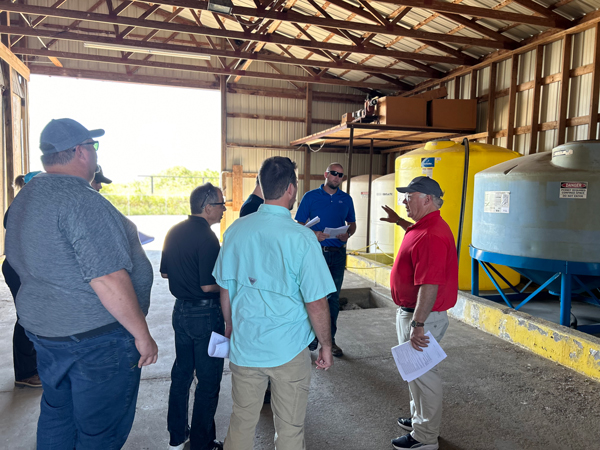
Whenever possible, supplement general training with examples from your own facility. Walk employees through the equipment they actually operate, the areas where products are stored, the procedures they are expected to follow, and the situations they are likely to encounter.
For example, instead of discussing emergency response only in general terms, ask employees: What would you do if this happened here? Who would you contact? Where would you go? What equipment would you need?
That turns training from information employees are expected to remember into a practical exercise they can apply.
Don’t Assume Training Is Complete Because a Box Is Checked
Documentation is important, particularly when training is required for regulatory or company purposes. But a completed training record does not necessarily mean an employee understood the material.
Build simple opportunities to confirm understanding.
That might include a short quiz, a hands-on demonstration, a conversation with a supervisor, or asking an employee to explain a procedure in their own words. For equipment-related training, having the employee demonstrate the correct procedure may be far more valuable than simply signing a form.
Supervisors also play an important role after formal training is complete. They can reinforce expectations in tailgate sessions, morning meetings, and day-to-day conversations throughout the year.
The objective isn’t simply to prove that training occurred. It’s to make sure employees can put that training into practice.
Keep Better Training Records
Even an excellent training program can create problems if the documentation is incomplete or difficult to locate.
Establish a consistent system for recording employee training. At a minimum, records should clearly identify the employee, training topic, date completed, and any other information necessary for the particular training requirement.
Just as importantly, make sure someone is responsible for maintaining those records.
A centralized system can help managers quickly identify upcoming training needs, determine whether a new employee has completed required training, and retrieve documentation when it is needed.
Before next year begins, review your current records and look for gaps. Doing so now is much easier than discovering missing documentation during an inspection or after an incident.
Make Training Central to the Operation
The strongest employee training programs aren’t built around a single annual training day. They make learning and reinforcement part of normal operations.
Use the coming months to review what worked this year, identify gaps, establish next year’s schedule, and involve supervisors in the process. Most importantly, focus on whether employees can apply what they learn when they are out in the shop, warehouse, truck, field, or office.
A little planning now can lead to a safer, more knowledgeable, and better-prepared workforce next year.