
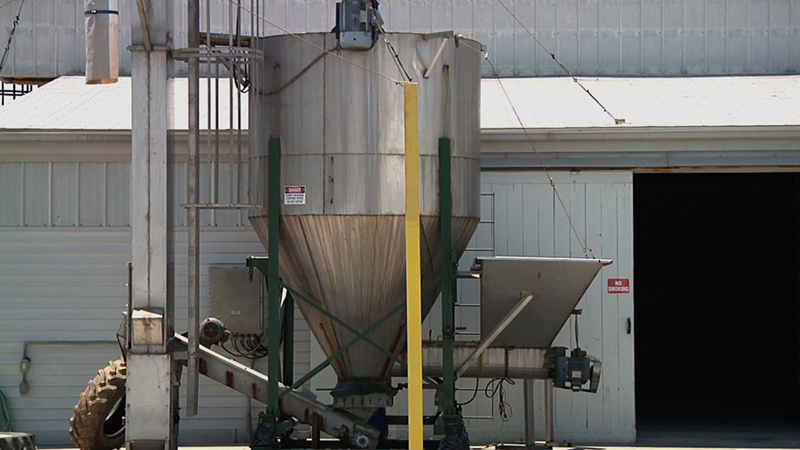
Introduction
Under the confined space standard, employers must identify all permit-required spaces in their workplaces, prevent unauthorized entry into them and protect authorized workers from hazards through a permit space program. There are several steps an employer should follow when beginning a confined space program. The first is to evaluate the workplace and determine whether it contains permit-required confined spaces as defined by OSHA. If it is determined that there are permit-required confined spaces, the employer must inform all exposed employees of the dangers by posting signs or some other equally effective means.
The next decision the employer must make is whether or not the confined space should be entered.
- If NO – The employer must take effective measures to prevent employees from entering the permit space.
- If YES – The employer must develop and implement a written permit space entry program.
Written Program
The written program should prevent unauthorized entry, identify and evaluate confined space hazards and establish procedures and practices for entry, including testing and monitoring. The plan must:
- Specify equipment used during entry;
- Specify attendant’s duties during entry;
- Establish procedures to summon rescuers and prevent unauthorized personnel from attempting rescue;
- Develop a system for preparing, issuing, using and canceling entry permits;
- Require testing of atmospheric conditions inside the space before entry; and
- Establish procedures for coordinated entry when employees of more than one employer are involved.
Permits
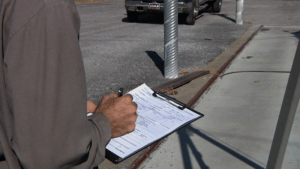
Written permits must be issued for entry into permit spaces and must be cancelled when work is completed. Permits must be available to all entrants at the time of entry and should only be good for the duration of the task. The entry supervisor must authorize entry, prepare and sign written permits, order corrective measures, if necessary, and cancel permits when work is complete.
Training
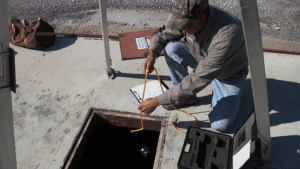 Training is required to ensure that employees involved in confined space work can perform their job functions safely. This training covers specific items for the authorized entrant, the attendant and the entry supervisor. Training covers the following:
- Authorized Entrant Responsibilities
- Know the hazards involved in confined space entry
- Select the appropriate personal protective equipment for confined space entry
- Maintain communication with the attendant
- Leave the space immediately when ordered by the attendant
- Alert the attendant immediately if a problem develops
- Attendant Duties
- Remain outside unless relieved
- Perform non-entry rescue when specified in procedure
- Know existing and potential hazards of the confined space
- Maintain communication at all times with entrants
- Order evacuation of the space when conditions warrant
- Summon rescue personnel when needed
- Ensure unauthorized people stay clear of area
- Perform no other duties that may interfere with attendant duties
- Entry Supervisor Responsibility
- Know the hazards involved in confined space entry
- Know the company’s permit system to remain consistent
- Complete emergency planning
Posting
 All permit confined spaces must be posted with signs indicating the existence and location of the danger posed by the permit space. Signs should read: “DANGER – PERMIT-REQUIRED CONFINED SPACE, DO NOT ENTER” or other similar language as applicable.
Recordkeeping
The written program for confined space entry must be kept and reviewed at least annually. Review the permit space program, using the canceled permits within one year after each entry and revise the program as necessary, to ensure that employees participating in entry operations are protected from permit space hazards. Entry permits must be retained for one year to facilitate review of the confined space program.
NOTE: Employers may perform a single annual review covering all entries performed during a 12-month period. If no entry is performed during a 12-month period, no review is necessary.
Rescue
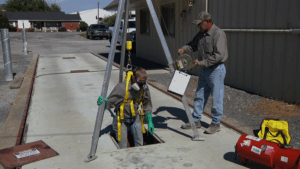 When an employer has designated a rescue and emergency service to perform confined space rescue, the employer is responsible for:
- Evaluating a prospective rescuer’s ability to respond to a rescue summons in a timely manner, considering the hazards identified (i.e. what is considered timely will vary according to the specific hazards involved in each entry);
- Evaluating a prospective rescue service’s ability, in terms of proficiency with rescue-related tasks and equipment, to function appropriately while rescuing entrants from the particular permit confined space or types of permit confined spaces that have been identified;
- Selecting a rescue team or service from those evaluated that has the capability to reach the victims within a time frame that is appropriate for the hazard identified and is equipped for and proficient in performing the needed rescue services;
- Informing each rescue team of the hazards they may confront when called to perform rescue at the site; and
- Providing the rescue team or service selected with access to all permit spaces from which rescue may be necessary so that the rescue service can develop appropriate rescue plans and practice rescue operations.
Employers whose employees will perform rescue duties in confined spaces are responsible for:
- Providing affected employees with the personal protective equipment (PPE) needed to conduct permit space rescues safely and the training of affected employees so they are proficient in the use of that PPE (PPE must be provided to the employee at no cost to them);
- Training affected employees to perform assigned rescue duties;
- Training of affected employees in basic first aid and cardiopulmonary resuscitation (CPR). The employer must ensure that at least one member of the rescue team or service holding a current certification in first aid and CPR is available; and
- Ensuring that affected employees practice making permit space rescues at least once every 12 months, by means of simulated rescue operations in which they remove dummies, mannequins or actual persons from the actual representative permit confined spaces or permit spaces. Representative permit confined spaces must, with respect to opening size, configuration and accessibility, simulate the types of permit confined spaces from which rescue is to be performed.
To facilitate non-entry rescue, retrieval systems or methods shall be used whenever an authorized entrant enters a permit space, unless the retrieval equipment would increase the overall risk of entry or would not contribute to the rescue of the entrant.
Each authorized entrant shall use a chest or full body harness with a retrieval line attached at the center of the entrant’s back near shoulder level, above the entrant’s head, or at another point which the employer can establish presents a profile small enough for the successful removal of the entrant. Wristlets may be used in lieu of the chest or full body harness if the employer can demonstrate that the use of a chest or full body harness is infeasible or creates a greater hazard and that the use of wristlets is the safest and most effective alternative.
The other end of the retrieval line shall be attached to a mechanical device or fixed point outside the space so the rescue can begin as soon as the rescuer becomes aware hat rescue is necessary. If the space is vertical and more than 5 feet deep, a mechanical device for removing the entrant must be available for use.
Attendant – an individual stationed outside one or more permit spaces who monitors the authorized entrants and who performs all attendant’s duties assigned in the employer’s permit space program.
Authorized entrant – an employee who is authorized by the employer to enter a permit space.
Confined space – a space that:
- Is large enough and so configured that an employee can bodily enter and perform assigned work; and
- Has limited or restricted means for entry or exit (i.e tanks, vessels, silos, storage bins, hoppers, vaults and pits are spaces that may have limited means of entry); and
- Is not designed for continuous employee occupancy.
Entry supervisor – person (such as the employer, foreman or crew chief) responsible for determining if acceptable entry conditions are present at a permit space where entry is planned, for authorizing entry and overseeing entry operations and for terminating entry.
Permit-required confined space (permit space) – a confined space that has one or more of the following characteristics:
- Contains or has a potential to contain a hazardous atmosphere;
- Contains a material that has the potential for engulfing an entrant;
- Has an internal configuration such that an entrant could be trapped or asphyxiated by inwardly converging walls or by a floor which slopes downward and tapers to a smaller cross-section; or
- Contains any other recognized serious safety or health hazard.
Non-permit confined space – a confined space that does not contain or, with respect to atmospheric hazards, have the potential to contain any hazard capable of causing death or serious physical harm.