
Introduction
The Occupational Safety and Health Administration (OSHA) references general requirements for compressed gases in 29 CFR 1910.101 and sets out requirements for oxygen-fuel gas welding and cutting in 29 CFR 1910.253. The handling, storage and use of all compressed gas cylinders must be in accordance with the Compressed Gas Association (CGA) Pamphlet P-1 Safe Handling of Compressed Gas Cylinders.
Gas Cylinder Storage and Handling
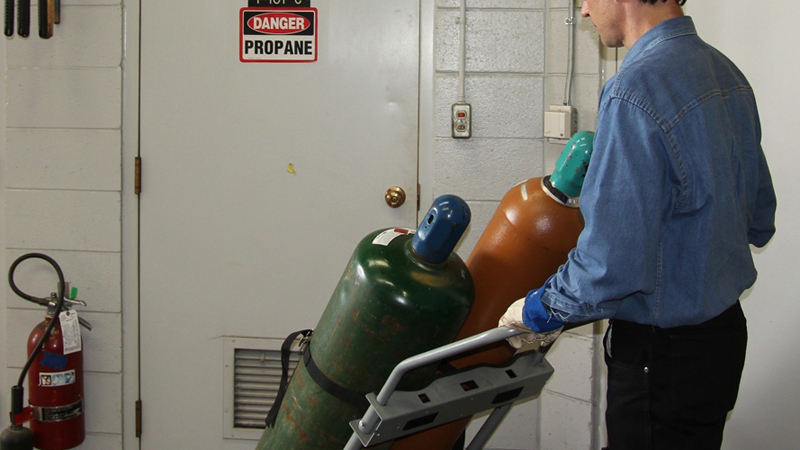
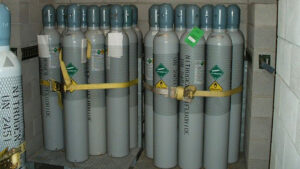 Gas cylinders should be properly secured at all times to prevent tipping, falling or rolling. They can be secured with straps or chains connected to a wall bracket or other fixed surface, or by use of a cylinder stand. The gas cylinders should be stored in a cool, dry, well-ventilated, fire-resistant area that meets all applicable federal, state and local regulations. When a gas cylinder is empty or not being used, ensure that the valve is closed, the regulator removed and that the valve protector cap is secured in place. Gas cylinders should be transported using hand trucks designed for that purpose and the cylinders should be secured so that they do not tip, fall or roll.
Do not use the valve protection cap for lifting a gas cylinder. It is necessary to take precautions so that gas cylinders are not dropped or allowed to strike each other or other objects. Dropping or striking may damage the gas cylinder valve, which could turn the gas cylinder into a dangerous torpedo with the potential to destroy property or injure people.
Inspection
Employers must inspect the cylinders to ensure that they are in a safe condition. CGA’s Pamphlet C-6, Standards for Visual Inspection of Compressed Gas Cylinders, gives detailed instructions and Appendix A provides a sample inspection report form. In general, inspect for exterior corrosion, denting, bulging, gouges or digs. Any flaws should be measured and compared to defined limits. Experience is important in the inspection of cylinders. Users who lack experience should return questionable cylinders. Leaking regulators, cylinder valves or other equipment should be taken out of service. 29 CFR 1910.253(e)(5)(v) – Hose showing leaks, burns, worn places or other defects rendering it unfit for service must be repaired or replaced.
Training
Compressed gases should be handled only by experienced and properly instructed individuals. Training should include safe usage procedures, employee protection from potential health and physical hazards associated with gas and cylinder usage, personal protective equipment and specific information relevant to the gas being used.
Labeling
Ensure that cylinders are clearly identified. Labels must not be defaced or removed. Do not accept or use containers with illegible content labels; segregate containers and return them to the supplier. Do not use the container color to identify the cylinder content. Do not repaint the container. Preferred labeling includes the identity of the material, statement of hazard and the associated signal word. All gas lines leading from a compressed gas supply must be clearly labeled or identified.
Segregation
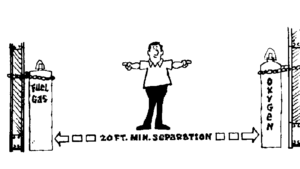 Do not store reserve stocks of cylinders containing flammable gases with cylinders containing oxygen. They should be segregated. Oxygen and fuel gas cylinders stored inside buildings should be separated by a minimum of 20 feet, or there should be a fire-resistive partition between them.