
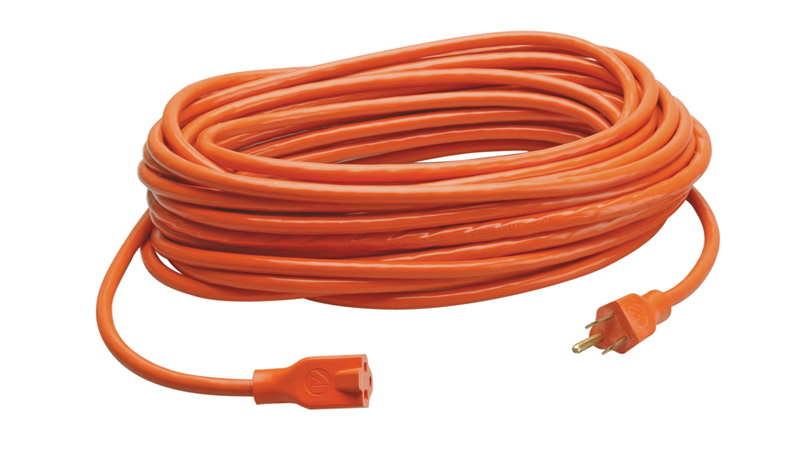
Overview
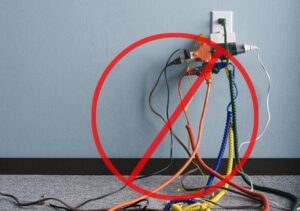 Flexible cords must be used only in continuous lengths without splice or tape. Grounding conductors must be provided.
Flexible cords may not be used in permanent installations:
- As a substitute for the fixed wiring of a structure;
- Where run through holes in walls, ceilings or floors;
- Where run through doorways, windows or similar openings;
- Where attached to building surfaces; or
- Where concealed behind building walls, ceilings or floors or
- Where installed in raceways, except as otherwise permitted.
Flexible cord sets (extension cords) must be visually inspected before use on any shift for external defects (such as loose parts, deformed and missing pins, or damage to outer jacket or insulation) and for evidence of possible internal damage (such as pinched or crushed outer jacket). Cord- and plug- connected equipment and flexible cord sets (extension cords) which remain connected once they are put in place and are not exposed to damage need not be visually inspected until they are relocated.
If there is a defect or evidence of damage that might expose an employee to injury, the defective or damaged item must be removed from service, and no employee may use it until repairs and tests necessary to render the equipment safe have been made.
When an attachment plug is to be connected to a receptacle (including any on a cord set), the relationship of the plug and receptacle contacts must first be checked to ensure that they are of proper mating configurations.