
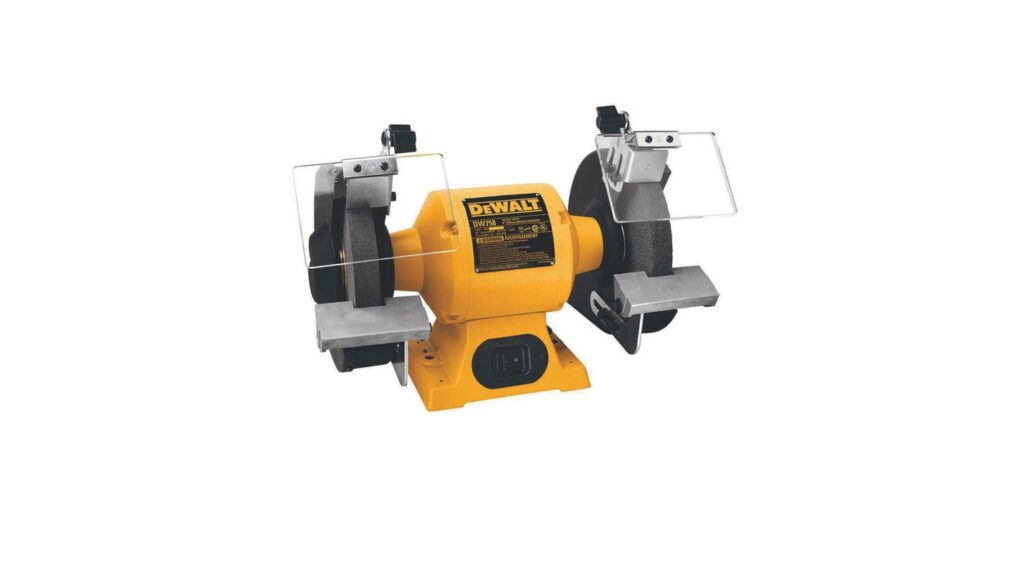
Overview
 Abrasive wheel machinery, such as bench grinders, must be guarded and maintained to protect employees. Abrasive wheels must be used only on machines provided with safety guards. The safety guard must cover the spindle end, nut and flange projections. The safety guard must be mounted to maintain proper alignment with the wheel and the strength of the fastenings must exceed the strength of the guard.
On offhand grinding machines, work rests must be used to support the work. They must be of rigid construction and designed to be adjustable to compensate for wheel wear. Work rests must be kept adjusted closely to the wheel with a maximum opening of 1/8 inch to prevent the work from being jammed between the wheel and the rest, which may cause wheel breakage. The work rest must be securely clamped after each adjustment.
To be adequately contained in the event of failure, the wheel must be enclosed. A grinding wheel must never be operated without a protective enclosure. Enclosure requirements for bench and pedestal models specify 270 degrees of covering, which means the enclosure opening can be no more than 90 degrees. A properly adjusted tongue guard will help contain a failing wheel. The tongue guard must be set within 1/4 inch of the surface of the wheel.