
Overview
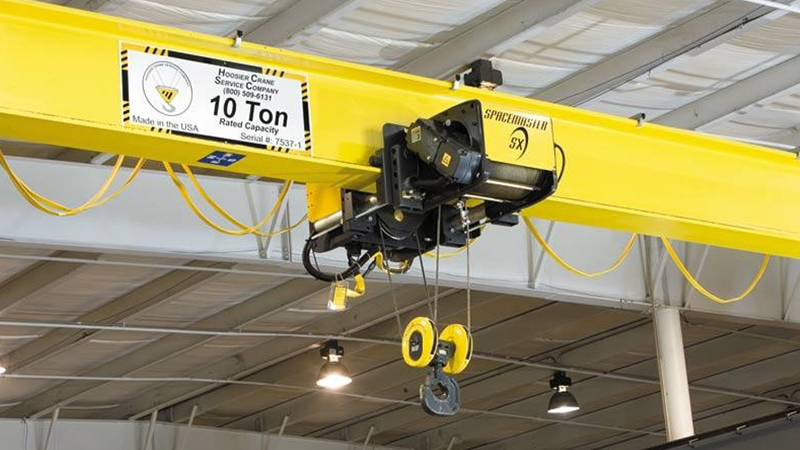
 The rated load of the crane must be plainly marked on each side of the crane, and if the crane has more than one hoisting unit, each hoist must have its rated load marked on it or its load block, and this marking must be clearly legible from the ground or floor. Cranes may be modified and rerated provided such modifications and the supporting structure are checked thoroughly for the new rated load by a qualified engineer or the equipment manufacturer. A minimum clearance of 3 inches overhead and 2 inches laterally must be provided and maintained between crane and obstructions. Where passageways or walkways are provided, obstructions must not be placed so that safety of personnel will be jeopardized by movements of the crane. Only designated personnel will be permitted to operate a crane.
Crane – a machine for lifting and lowering a load and moving it horizontally, with the hoisting mechanism an integral part of the machine. Cranes, whether fixed or mobile, are driven manually or by power.
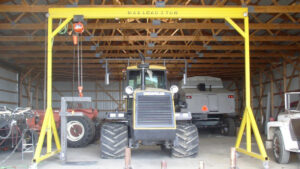
Gantry crane – a crane similar to an overhead crane except that the bridge for carrying the trolley or trolleys is rigidly supported on two or more legs running on fixed rails or other runway.
Hoist – an apparatus which may be a part of a crane, exerting a force for lifting or lowering.