
Introduction
The Occupational Safety and Health Administration’s (OSHA) Hot Work Program is a “permit-based” program, carried out at facilities by designated personnel, allowing them to oversee and issue permits for the hot work activities conducted by their personnel or at their facility. The intent is to have trained, onsite, responsible personnel ensure that required hot work safety measures are taken to prevent fires and the spread of fire. It is recommended that a written policy be developed to provide procedures to prevent the outbreak of fire, fire alarm activations, and smoke and odor migrations in buildings resulting from any temporary operation involving the use of open flames or which produces heat and/or sparks.
Authorization
Before cutting or welding is permitted, the area must be inspected by the individual responsible for authorizing cutting and welding operations. This individual must designate precautions to be followed, preferably in the form of a written permit, in granting authorization to proceed.
Training
 The requirement for training on Hot Work activities is related to the use of welders, torches and other spark and flame producing devices. Employers are responsible for training employees to work safely with fuel gas in welding and cutting operations. The training includes making workers aware of the interactive nature of welding hazards. Employees need to know when work falls within the scope of this program and those involved in hot work need to be trained in the hot work requirements.
Fire watchers are required in many instances in welding operations. They must be familiar with the alarm system and try to put out fires only when obviously within the capability of available equipment. Training on Hot Work is also important in the grain handling industry.
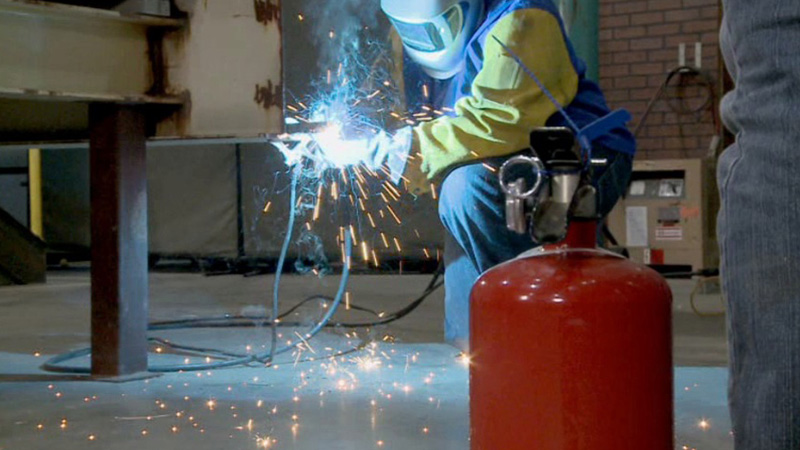
Hot Work – any operation producing flame, sparks or heat, including cutting, welding, brazing, grinding, sawing, torch soldering, etc.