
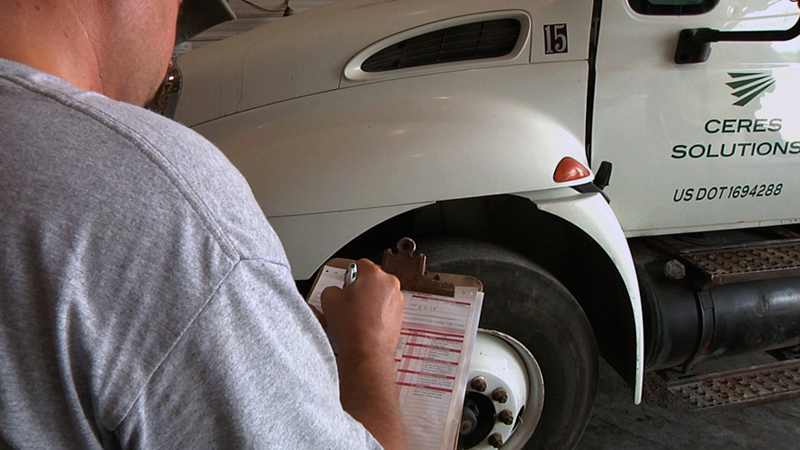
Overview
 A motor carrier must not use a commercial motor vehicle unless each of the following components has passed an inspection in accordance with the terms of 49 CFR 396 at least once during the preceding 12 months and documentation of such inspection is carried in the vehicle:
- Brake system;
- Coupling devices;
- Exhaust system;
- Fuel system;
- Lighting devices;
- Safe loading;
- Steering mechanism;
- Suspension;
- Frame;
- Tires;
- Wheels and rims;
- Windshield glazing;
- Windshield wipers; and
- Rear impact guard.
The documentation maybe the inspection report or other forms of documentation, based on the inspection report (i.e. sticker or decal), which contains the following information:
- The date of inspection;
- Name and address of the motor carrier where the inspection report is maintained;
- Information uniquely identifying the vehicle inspected if not clearly marked on the motor vehicle; and
- A certification that the vehicle has passed an inspection.
The last 14 months of inspections are required to be maintained on file.
Commercial Motor Vehicle (CMV) – any self-propelled or towed motor vehicle used on a highway in interstate commerce to transport passengers or property when the vehicle:
- Has a gross vehicle weight rating or gross combination weight rating, or gross vehicle weight or gross combination weight (10,001 pounds) or more, whichever is greater; or
- Is designed or used to transport more than 8 passengers (including the driver) for compensation; or
- Is designed or used to transport more than 15 passengers, including the driver, and is not used to transport passengers for compensation; or
- Is used in transporting material in a quantity requiring placarding under DOT regulations.