
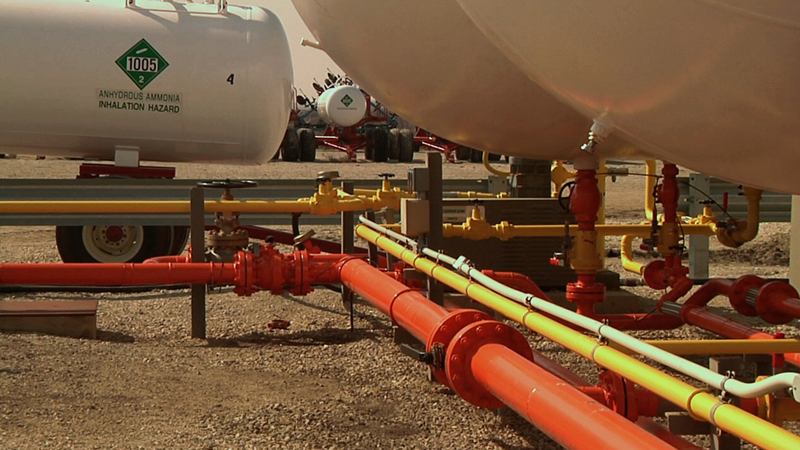
Introduction
This regulation contains requirements for preventing or minimizing the consequences of catastrophic releases of toxic, reactive, flammable or explosive chemicals.These releases may result in toxic, fire or explosion hazards.
This standard applies to the following:
- A process which involves a chemical at or above the specified threshold quantities listed in Appendix A in the standard (this appendix contains 137 chemicals);
- A process which involves a flammable gas or a flammable liquid onsite in one location, in a quantity of 10,000 pounds or more except for:
- Hydrocarbon fuels used solely for workplace consumption as a fuel (i.e., propane used for comfort heating, gasoline for vehicle refueling), if such fuels are not a part of a process containing another highly hazardous chemical covered by this standard;
- Flammable liquids stored in atmospheric tanks or transferred, which are kept below their normal boiling point without benefit of chilling or refrigeration.
This standard does not apply to:
- Retail facilities;
- Oil or gas well drilling or servicing operations; or
- Normally unoccupied remote facilities.
Employee Participation
Employers must develop a written plan of action regarding the implementation of the following employee participation requirements:
- Employers must consult with employees on the conduct and development of process hazards analyses and on the development of the other elements of PSM in the standard.
- Employers must provide employees access to process hazard analyses and to all other information required to be developed under the standard.
Process Safety Information
According to the schedule in the Initial Assessment-Process Hazard Analysis section, the employer must complete a compilation of written process safety information before conducting any process hazard analysis required by the standard. The compilation of written process safety information is to enable the employer and the employees involved in operating the process to identify and understand the hazards posed by those processes involving highly hazardous chemicals. This process safety information must include the following:
- Information pertaining to the hazards of the highly hazardous chemicals used or produced by the process;
- Information pertaining to the technology of the process; and
- Information pertaining to the equipment in the process.
Process Hazard Analysis
The employer must perform an initial process hazard analysis on covered processes. The process hazard analysis must be appropriate to the complexity of the process and must identify, evaluate and control the hazards involved in the process.
The employer must use one or more of the following methodologies:
- What-If;
- Checklist;
- What-If/Checklist;
- Hazard and Operability Study (HAZOP);
- Failure Mode and Effects Analysis;
- Fault Tree Analysis; or
- An appropriate equivalent methodology.
The process hazard analysis must address:
- The hazards of the process;
- The identification of any previous incident which had a likely potential for catastrophic consequences in the workplace;
- Engineering and administrative controls applicable to the hazards and their interrelationships such as appropriate application of detection methodologies to provide early warning of releases;
- Consequences of failure of engineering and administrative controls;
- Facility siting;
- Human factors; and
- A qualitative evaluation of a range of the possible safety and health effects of failure of controls on employees in the workplace.
The process hazard analysis must be performed by a team with expertise in engineering and process operations, and the team must include at least one employee who has experience and knowledge specific to the process being evaluated. Also, one member of the team must be knowledgeable in the specific process hazard analysis methodology being used.
The employer must establish a system to promptly address the team’s findings and recommendations; assure that the recommendations are resolved in a timely manner and that the resolution is documented; document what actions are to be taken; complete actions as soon as possible; develop a written schedule of when these actions are to be completed; communicate the actions to operating, maintenance and other employees whose work assignments are in the process and who may be affected by the recommendations or actions.
At least every five years after the completion of the initial process hazard analysis, the process hazard analysis must be updated and revalidated by a team to assure that it is consistent with the current process. Employers must retain process hazard analyses and updates or re-validations for each covered process for the life of the process.
Operating Procedures
The employer must develop and implement written operating procedures that provide clear instructions for safely conducting activities involved in each covered process consistent with the process safety information and must address at least the following elements:
- Steps for each operating phase, including initial startup; normal, temporary and emergency operations; normal and emergency shutdown; and startup following a turnaround or after an emergency shutdown;
- Operating limits, including consequences of deviation and steps required to correct or avoid deviation;
- Safety and health considerations, including properties of, and hazards presented by, the chemicals used in the process; precautions necessary to prevent exposure; control measures to be taken if physical contact or airborne exposure occurs; quality control for raw materials and control of hazardous chemical inventory levels; and any special or unique hazards; and
- Safety systems and their functions.
Operating procedures must be readily accessible to employees who work in or maintain a process, and must be reviewed as often as necessary to assure that they reflect current operating practice, including changes that result from changes in process chemicals, technology, and equipment and changes to facilities. The employer must certify annually that these operating procedures are current and accurate.
Safe Work Practice Procedures
The employer must develop and implement safe work practices to provide for the control of hazards during operations such as lockout/tagout; confined space entry; opening process equipment or piping; and control over entrance into a facility by maintenance, contractor or other support personnel. These safe work practices apply to employees and contractor employees.
Training
Each employee presently involved in operating a process, and each employee before being involved in operating a newly assigned process, must be trained in an overview of the process and in the operating procedures. The training must include emphasis on the specific safety and health hazards, emergency operations including shutdown and safe work practices applicable to the employee’s job tasks.
Refresher training must be provided at least every three years, and more often if necessary, to each employee involved in operating a process to assure that the employee understands and adheres to the current operating procedures of the process. The employer must prepare a record which contains the identity of the employee, the date of training and the means used to verify that the employee understood the training.
Pre-Startup Review
The employer must perform a pre-startup safety review for new facilities and for modified facilities when the modification is significant enough to require a change in the process safety information. The pre-startup safety review must confirm that prior to the introduction of highly hazardous chemicals to a process:
- Construction and equipment are in accordance with design specifications;
- Adequate safety, operating, maintenance and emergency procedures are in place;
- For new facilities, a process hazard analysis has been performed and recommendations have been resolved or implemented before startup; and modified facilities meet the requirements of management of change procedures; and
- Training of each employee involved in operating a process has been completed.
Mechanical Integrity
The employer must establish and implement written procedures to maintain the on-going mechanical integrity of process equipment. The employer must train each employee involved in maintaining the on-going integrity of process equipment in an overview of that process and its hazards and in the procedures applicable to the employee’s job tasks to assure that the employee can perform the job tasks in a safe manner.
This applies to the following process equipment:
- Pressure vessels and storage tanks;
- Piping systems (including piping components such as valves);
- Relief and vent systems and devices;
- Emergency shutdown systems;
- Controls (including monitoring devices and sensors, alarms and interlocks); and
- Pumps.
Inspections and tests that follow recognized and generally accepted good engineering practices must be performed on process equipment. The frequency of inspections and tests of process equipment must be consistent with applicable manufacturers’ recommendations and good engineering practices, and more frequently if determined to be necessary by prior operating experience.
The employer must document each inspection and test that has been performed on process equipment. The documentation must identify the date of the inspection or test, the name of the person who performed the inspection or test, the serial number or other identifier of the equipment on which the inspection or test was performed, a description of the inspection or test performed and the results of the inspection or test. Additionally, the employer must correct deficiencies in equipment that are outside acceptable limits before further use or in a safe and timely manner when necessary means are taken to assure safe operation.
Management Of Change
The employer must establish and implement written procedures to manage changes (except for “replacements in kind”) to process chemicals, technology, equipment, and procedures; and, changes to facilities that affect a covered process. The procedures must assure that the following considerations are addressed prior to any change:
- The technical basis for the proposed change;
- Impact of change on safety and health;
- Modifications to operating procedures;
- Necessary time period for the change; and,
- Authorization requirements for the proposed change.
Employees involved in operating a process, and maintenance and contract employees whose job tasks will be affected by a change in the process, must be informed of, and trained in, the change prior to startup of the process or affected part of the process. If a change covered by this standard results in a change in the process safety information required, such information must be updated accordingly. If a change covered by these standard results in a change in the operating procedures required, such procedures or practices must be updated accordingly.
Incident Investigation
The employer must investigate as soon as possible, but not later than 48 hours following each incident which resulted in, or could reasonably have resulted in, acatastrophic release of a highly hazardous chemical in the workplace. An incident investigation team must be established and consist of at least one person knowledgeable in the process involved, including a contract employee if the incident involved work of the contractor, and other persons with appropriate knowledge and experience to thoroughly investigate and analyze the incident. A report must be prepared at the conclusion of the investigation which includes at a minimum:
- Date of incident;
- Date investigation began;
- A description of the incident;
- The factors that contributed to the incident; and,
- Any recommendations resulting from the investigation.
The employer must establish a system to promptly address and resolve the incident report findings and recommendations. Resolutions and corrective actions must be documented. Also, the report must be reviewed with all affected personnel, whose job tasks are relevant to the incident findings, including contract employees where applicable. Incident investigation reports must be retained for five years.
Compliance Audits
Employers must certify they have evaluated compliance with the provisions of this standard at least every three years to verify that the procedures and practices developed under it are adequate and are being followed.
The following must be adhered to in the compliance audit:
- It is conducted by at least one person knowledgeable in the process;
- A report of the findings of the audit is developed;
- The employer promptly determines and documents an appropriate response to each of the findings of the compliance audit, and documents that deficiencies have been corrected; and
- Employers retain the two most recent compliance audit reports.
Normally unoccupied remote facility – a facility which is operated, maintained or serviced by employees who visit the facility only periodically to check its operation and to perform necessary operating or maintenance tasks. No employees are permanently stationed at the facility. Facilities meeting this definition are not contiguous with, and must be geographically remote from all other buildings, processes or persons.
Process – any activity involving a highly hazardous chemical, including any use, storage, manufacturing, handling or the on-site movement of such chemicals, or combination of these activities. For purposes of this definition, any group of vessels which are interconnected and separate vessels which are located such that a highly hazardous chemical could be involved in a potential release must be considered a single process.