
Overview
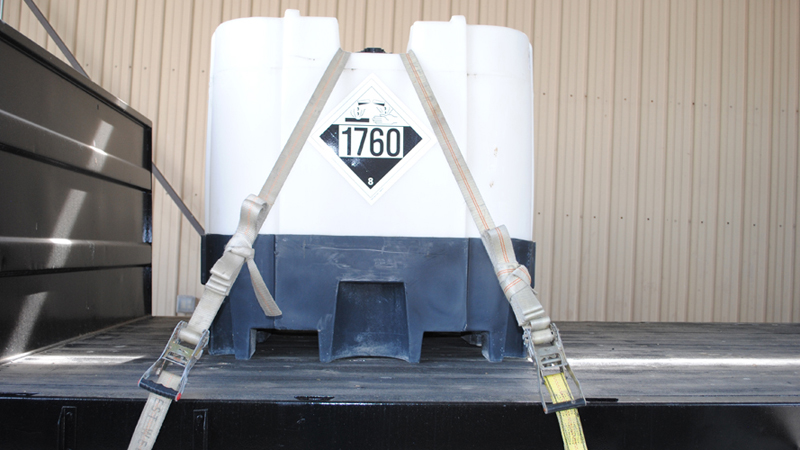
49 CFR 177.834 – The Department of Transportation (DOT) requires that any package containing any hazardous material that is not permanently attached to a motor vehicle, be secured from shifting in all directions during transportation. Packages having valves or other fittings must be loaded in a manner to minimize the likelihood of damage during transportation.
49 CFR 393.130 – Cargo must be firmly immobilized or secured on or within a vehicle by structures of adequate strength, dunnage (loose materials used to support and protect cargo) or dunnage bags (inflatable bags intended to fill space between articles of cargo or between cargo and the wall of the vehicle), shoring bars, tiedowns or a combination of these.
This securement must protect the package from movement “under conditions normally incident to transportation.” Gravity, a common excuse for unsecured loads, is not an acceptable means of securing cargo. Chains, cables or tiedowns must be of sufficient strength for the load they are securing. The phrase “under conditions normally incident to transportation” includes vehicle movements such as starting, stopping, cornering, accident avoidance and varied road conditions.
The requirements can be met by blocking the packages with other freight, the use of tie-downs, toe-boards, load-bars or other similar securement methods or devices. Drums banded together or packages shrink-wrapped on a pallet do not meet the load securement requirements unless the entire unit is secured to the vehicle. Packages placed at the nose of the vehicle must also have rearward securement protection.