
EPA and the US Army Corps of Engineers released a proposed rule revising the regulatory definition of “waters of the United States,” or “WOTUS,” a key phrase in the Clean Water Act that determines the jurisdictional reach of the Act.
Key proposed revisions include:
- Defining key terms like “relatively permanent,” “continuous surface connection,” and “tributary” to appropriately delineate the scope of WOTUS consistent with the Clean Water Act and Supreme Court precedent;
- Establishing that jurisdictional tributaries must connect to traditional navigable waters either directly or through other features that provide predictable and consistent flow;
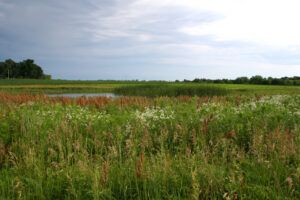
- Reaffirming that wetlands must be indistinguishable from jurisdictional waters through a continuous surface connection, which means that they must touch a jurisdictional water and hold surface water for a requisite duration year after year;
- Strengthening state and tribal decision-making authority by providing clear regulatory guidelines while recognizing their expertise in local land and water resources;
- Preserving and clarifying exclusions for certain ditches, prior converted cropland, and waste treatment systems; Adding a new exclusion for groundwater; and
- Incorporating locally familiar terminology, such as “wet season,” to help determine whether a water body qualifies as WOTUS;
- In addition, the limitation to wetlands that have surface water at least during the wet season and abut a jurisdictional water will further limit the scope of permafrost wetlands that are considered to have a continuous surface connection under the proposed rule. These proposed changes are intended to provide clarity and consistency to the continuous surface connection definition.
By aligning federal jurisdiction with the Supreme Court’s Sackett decision, this rule provides a practical framework that respects state authority while reducing unnecessary regulatory burdens. The proposed rule is available for public comment on or before January 5, 2026.