
Overview
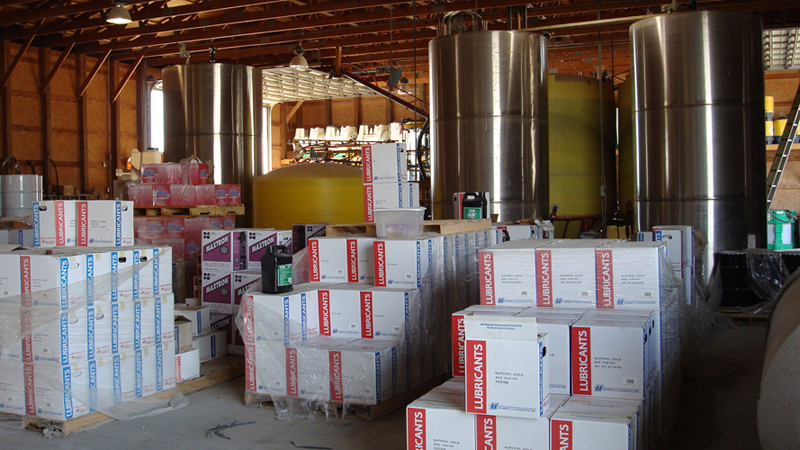
 It is unlawful to use any registered pesticide in a manner inconsistent with its labeling. Pesticides whose uncontrolled release into the environment would cause unreasonable adverse effects on the environment should be stored only in facilities where due regard has been given to the hazardous nature of the pesticide, site selection, protective enclosures and operating procedures, and where adequate measures are taken to assure personal safety, accident prevention and detection of potential environmental damages. Pesticides should be stored in a dry, well-ventilated, separate room, building or covered area where fire protection is provided.
Where relevant and practicable, the following precautions should be taken:
- The entire storage facility should be secured by a climb-proof fence, and doors and gates should be kept locked to prevent unauthorized entry;
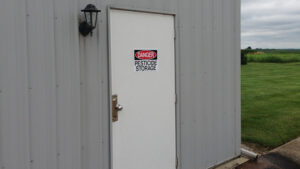
- Identification signs should be placed on rooms, buildings and fences to advise of the contents and warn of their hazardous nature;
- All items of movable equipment used for handling pesticides at the storage site, which might be used for other purposes, should belabeled “contaminated with pesticides” and should not be removed from the site unless thoroughly decontaminated; and
- Provision should be made for decontamination of personnel and equipment such as delivery trucks, tarpaulin covers, etc. Where feasible, a wash basin and shower with a delayed-closing pull chain valve should be provided. All contaminated water should be disposed of as an excess pesticide. Where required, decontamination area should be paved or lined with impervious materials, and should include contaminated runoff. Contaminated water should be collected and treated as an excess pesticide.