
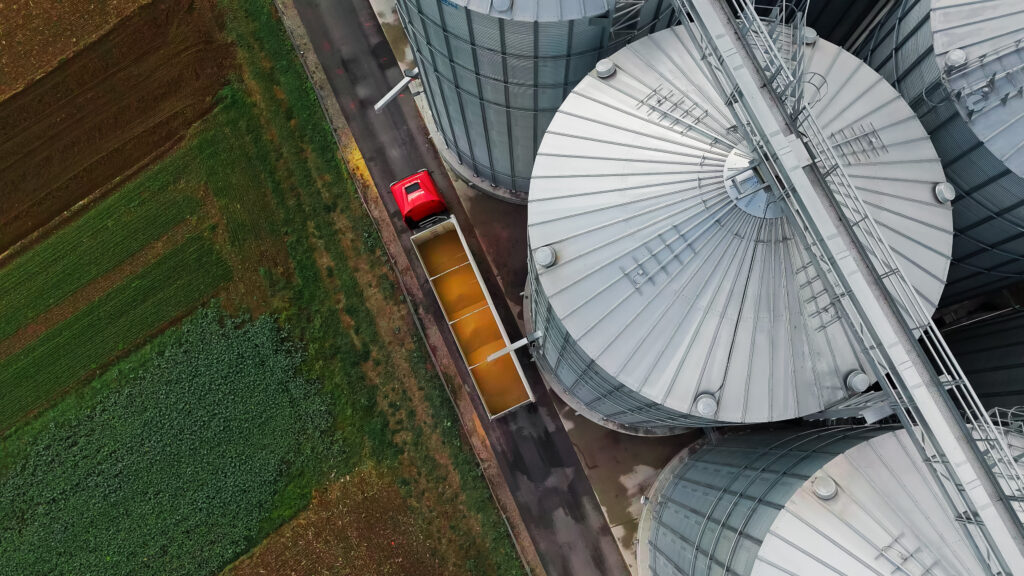
During spring planting and fall harvest, agricultural retail facilities can quickly become crowded, fast-moving workplaces. Tender trucks are loading, customers are picking up product, delivery vehicles are arriving, and employees are moving equipment—often at the same time.
Increased activity is good for business, but it also increases the potential for vehicle collisions, struck-by incidents, and property damage. A practical traffic management plan can help keep people and equipment moving safely without unnecessarily slowing operations.
Establish a Predictable Traffic Flow
Drivers entering the facility should be able to quickly determine where to go and how to exit. Whenever practical, establish designated entrances and exits, one-way traffic patterns, marked loading areas, and separate parking for employees and visitors.
Before the busy season, drive through the facility as if you were a first-time visitor. Are directions clear? Can drivers easily identify where to stop, load, wait, and turn around? Correcting confusing areas ahead of time can prevent problems when traffic increases.
Separate Vehicles and Pedestrians
Locations where pedestrians and moving equipment share space deserve extra attention. Employees may be familiar with normal traffic patterns, but customers, contractors, and seasonal employees may not recognize the hazards.
Where possible, establish pedestrian routes away from truck and equipment traffic. Pay particular attention to offices, warehouses, loadout areas, scales, and parking lots. Operators of forklifts, loaders, and other mobile equipment should never assume pedestrians can see or hear them approaching.
Reduce Backing Hazards
Large trucks, trailers, and application equipment have significant blind spots, making backing a higher-risk activity.
Whenever possible, design traffic patterns that allow vehicles to move forward through loading and unloading areas. When backing is necessary, use appropriate precautions such as checking the area before moving, using a trained spotter when needed, and maintaining clear communication. Drivers should stop immediately if they lose sight of a spotter.
Keep Travel Areas Clear
Pallets, mini-bulks, equipment, empty containers, and parked vehicles can restrict travel lanes and visibility during busy periods. Keep intersections, corners, fire lanes, and primary traffic routes clear.
Regularly inspect outdoor areas for materials, vegetation, equipment, or vehicles that create blind spots or interfere with safe movement.
Prepare for Peak Traffic
Even a good traffic plan can break down when several vehicles arrive at once. Determine in advance where trucks and customers should wait during peak periods. Staging areas should not block public roads, emergency access, railroad crossings, entrances, or operating equipment.
Employees responsible for directing traffic should understand the plan. Providing customers and drivers with simple instructions about where to report, stage, and load can also reduce unnecessary movement around the property.
Review Before the Rush
Before each busy season, review entrances and exits, signs, parking areas, truck staging, pedestrian routes, blind corners, backing areas, lighting, and emergency access. Include traffic expectations in seasonal employee training and provide clear instructions to contractors and visiting drivers.
Ask employees for input, too. Those working in the yard, warehouse, and loadout areas often know where congestion, confusion, and close calls occur.
Agricultural retailers cannot eliminate busy-season traffic, but they can manage it. Clear traffic patterns, good visibility, safe backing practices, pedestrian awareness, and effective communication can reduce risk while keeping the operation moving efficiently.
A little planning before the rush can help ensure a productive busy season is also a safer one.